Donate
Uncategorized
The Marula Festival
Apr
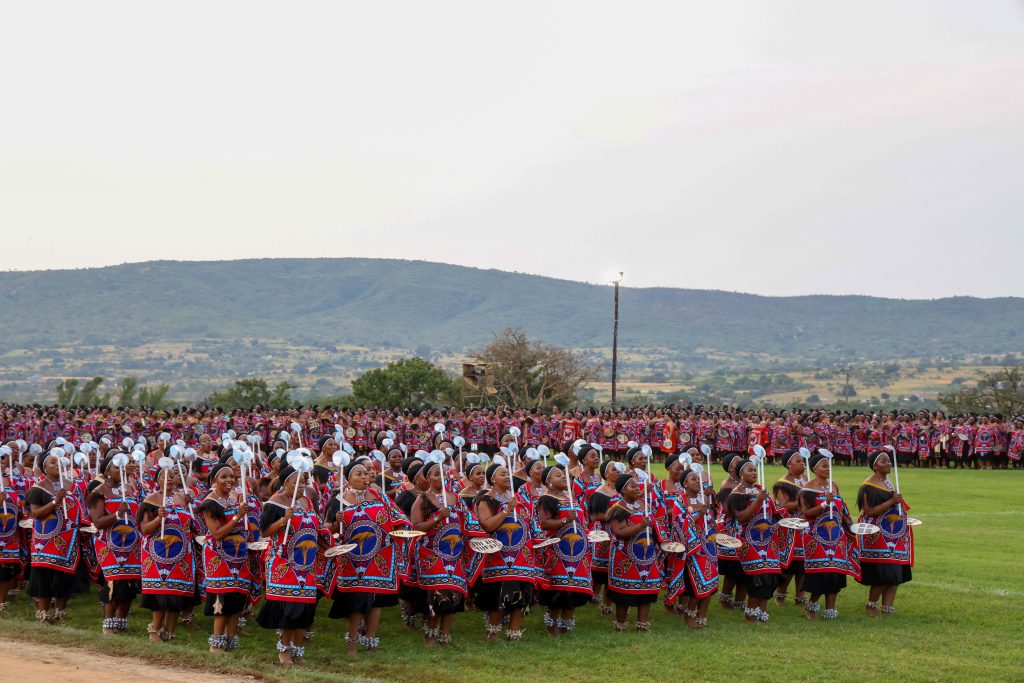
The Marula Festival is a significant annual national celebration in the Kingdom of Eswatini, during which the Lutsango regiment—comprising women from all four regions of the country, as well as from beyond its borders—gathers to pay homage to Their Majesties. The Marula season typically begins in mid-February and extends through May, marking a period of cultural observance centered on the harvesting and processing of the marula fruit.
Central to the festival is the preparation of buganu (marula brew), a process deeply rooted in tradition. Women and children collect ripe marula fruits (emaganu), ensuring that only those that have naturally fallen from the marula tree (umganu) are gathered, as these are considered ready for use. The fruits are then stored until they reach full ripeness, indicated by a yellowish hue. Thereafter, they are carefully washed and pierced to initiate the fermentation process. Once pierced, the seeds (tinganu) are removed and dried for further use.
These seeds are subsequently processed into a diverse range of value-added products, including skincare items such as tissue oils and soaps, as well as edible products like bread spreads. In their dried form, they also serve cultural and recreational purposes, with children traditionally using them as materials for indigenous games and play activities. The brewing process typically takes up to seven days, resulting in a culturally significant beverage that symbolizes abundance and communal sharing.
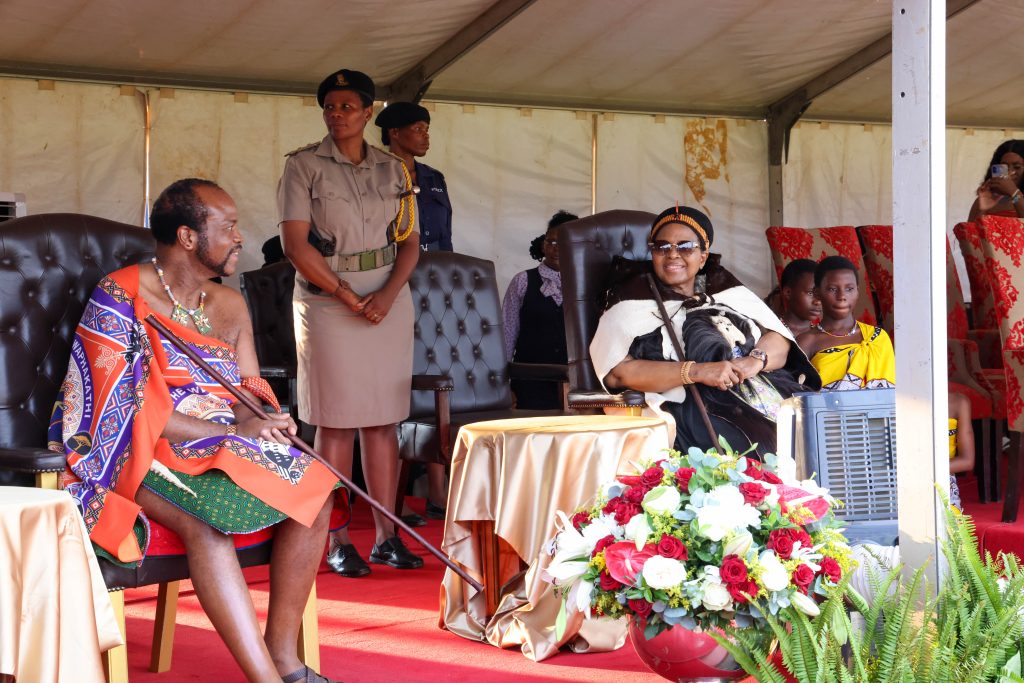
Spanning three days—from Friday to Sunday—the festival is held at the eBuhleni and eHlane Royal Residences (on separate occasions). During this time, Their Majesties join the nation in vibrant displays of traditional song, dance, and cultural expression, reinforcing unity and shared heritage.
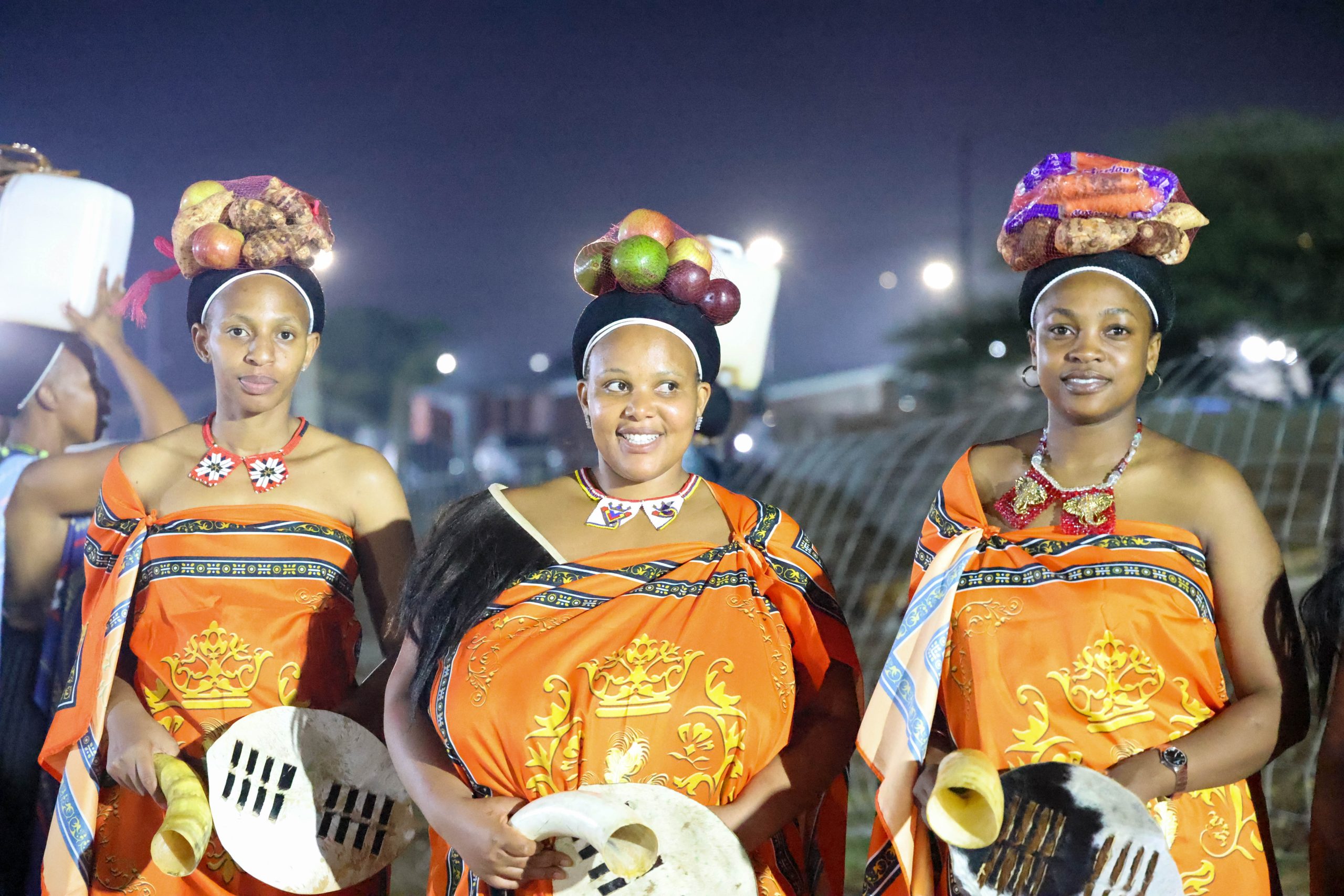
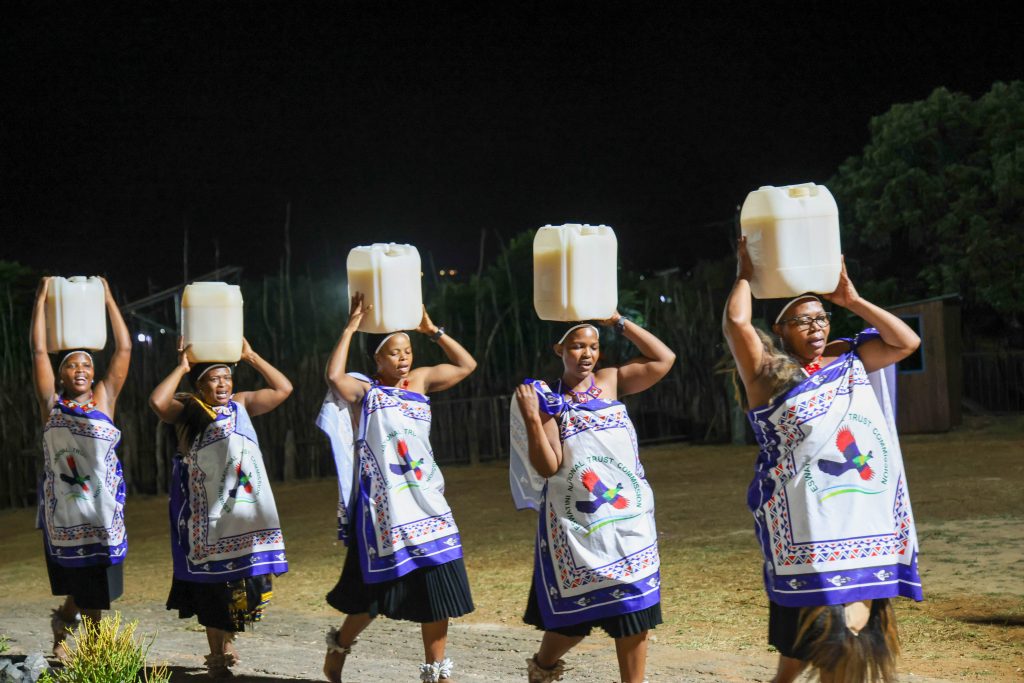
The first day, Friday, marks the ceremonial opening of the festival. Women arrive adorned in traditional attire distinguished by a rich variety of colours, patterns, and designs that reflect their respective communities, associations, or affiliations. In a spirited and celebratory atmosphere, they present marula brew to Her Majesty the Indlovukazi, accompanied by seasonal fruits, vegetables, and intricately handwoven crafts. These presentations are carried out through synchronized singing and rhythmic dancing, creating a lively communal experience.
Saturday, the second day, emphasizes unity and collective identity. On this day, the women are presented with lihiya (a traditional garment), symbolizing cohesion and bridging social and economic differences among participants. Later in the afternoon, they assemble in the arena to perform traditional dances before Their Majesties, dignitaries, and visitors. Among the prominent dances performed are ummiso and kutsamba, both of which embody joy, cultural pride, and the continuity of Swati traditions.
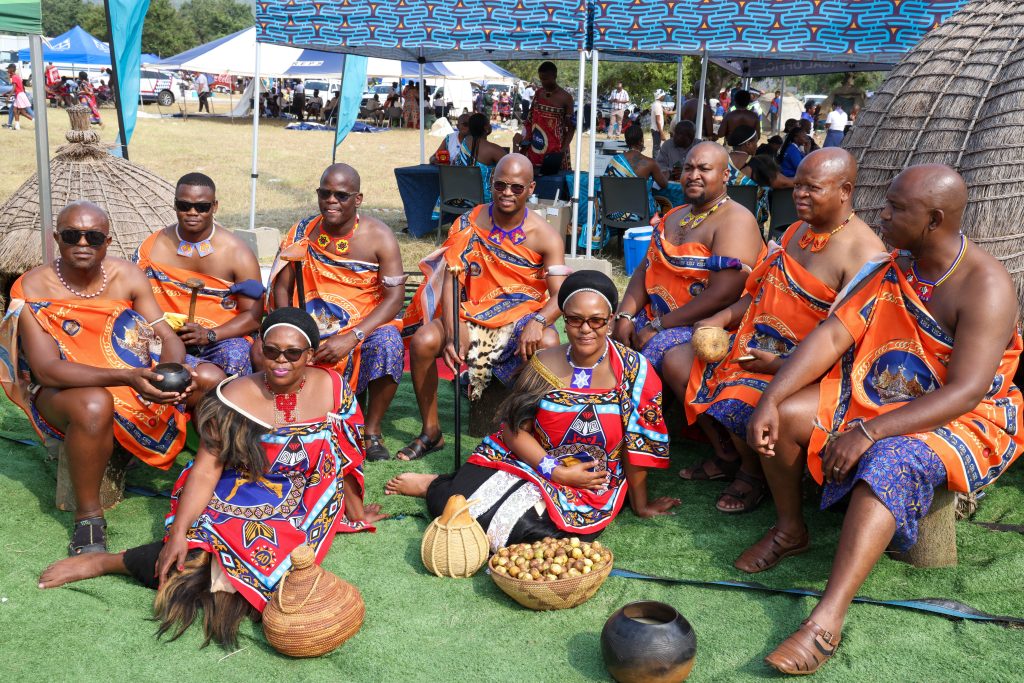
The day also features a cultural exhibition organized by the Eswatini National Trust Commission, showcasing a replica of a traditional siSwati homestead. This includes the gucasithandaze structure and various artefacts illustrating the marula brewing process. The exhibition serves as an educational platform where tourists, international visitors, and local attendees can engage with Swati heritage, including tasting the marula brew after receiving historical and cultural context about the festival.
The third and final day, Sunday, brings the festival to a dignified close. On this day, Their Majesties present the women with gifts as a gesture of appreciation and goodwill. These gifts are taken home to be shared with their families, symbolizing the extension of royal generosity into the broader community. Following this, participants depart, marking the conclusion of a festival that not only celebrates the marula harvest but also reinforces cultural identity, unity, and the enduring values of the Swati nation